9.8
The Hearing Device Review's Verdict
7 Reasons Audexa Is the Hearing Aid Comparison That Actually Ends the Search
Every rechargeable hearing device you've looked at promised clear sound at an honest price. Most of them lied about one of those things. Here's the one that didn't.
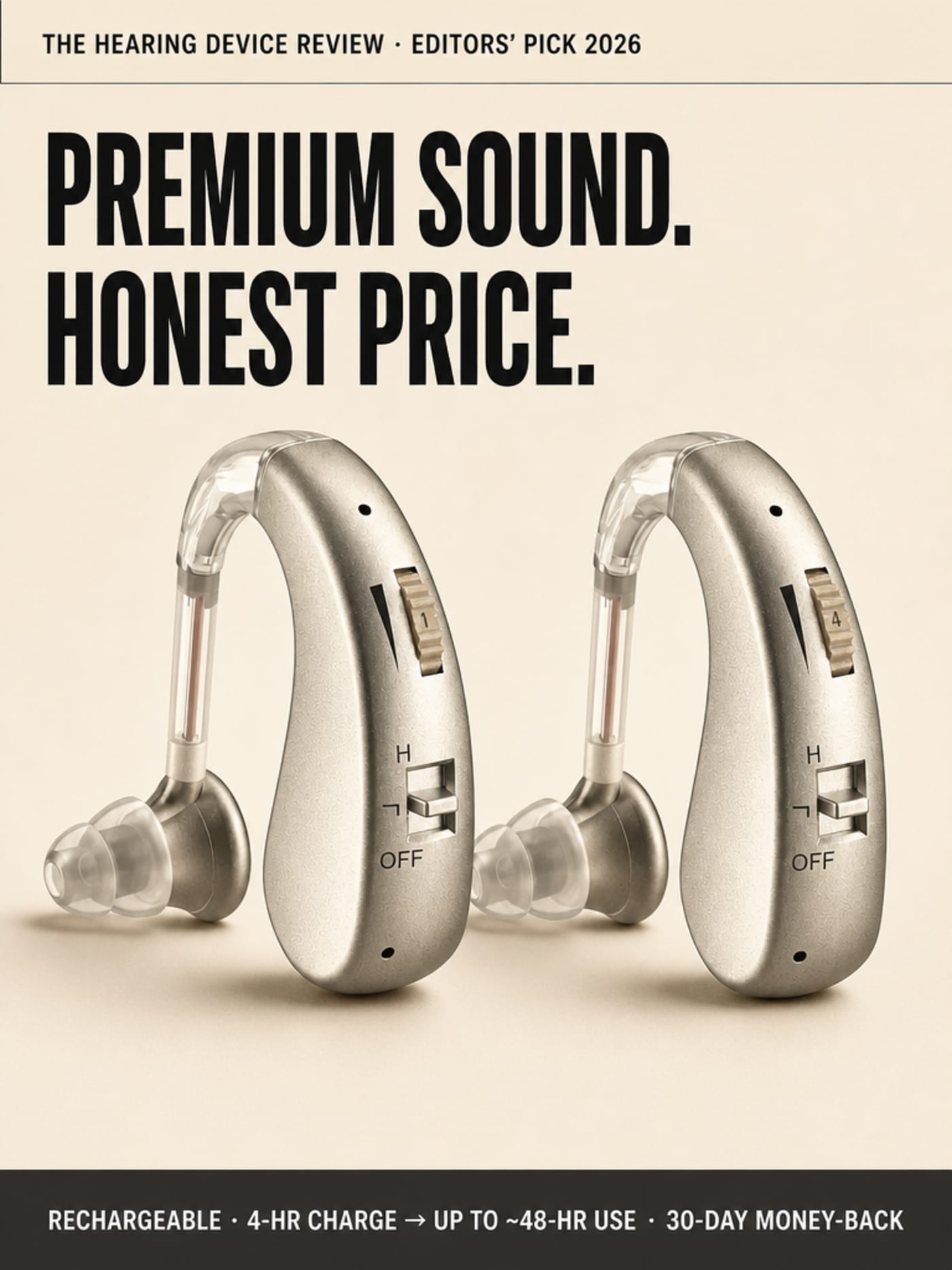
Quick Summary
If you've already been quoted $4,000+ at a clinic and walked out — or if you've burned through a drawer of $40 amplifiers that whistled and fell apart — this is the comparison that stops the loop. Audexa is a rechargeable behind-the-ear hearing device that you set up yourself at home, with no prescription and no clinic markup. The 30-day money-back means you're not betting anything to find out.
You're not here because you haven't heard of hearing aids. You're here because every option you've looked at has a catch: the clinic wants $5,000, the cheap ones whistle and die in six weeks, and every "affordable" DTC brand seems to run the same playbook — a countdown timer, a suspiciously round "4.8/5," and a return policy that quietly costs you $21 to use. The real comparison isn't hearing aid A vs. hearing aid B. It's: which one of these is actually worth trying? That's what this page answers.
What Changes for You
1
It's the first honest answer to a $5,000 problem — not a cheaper version of the same scam.
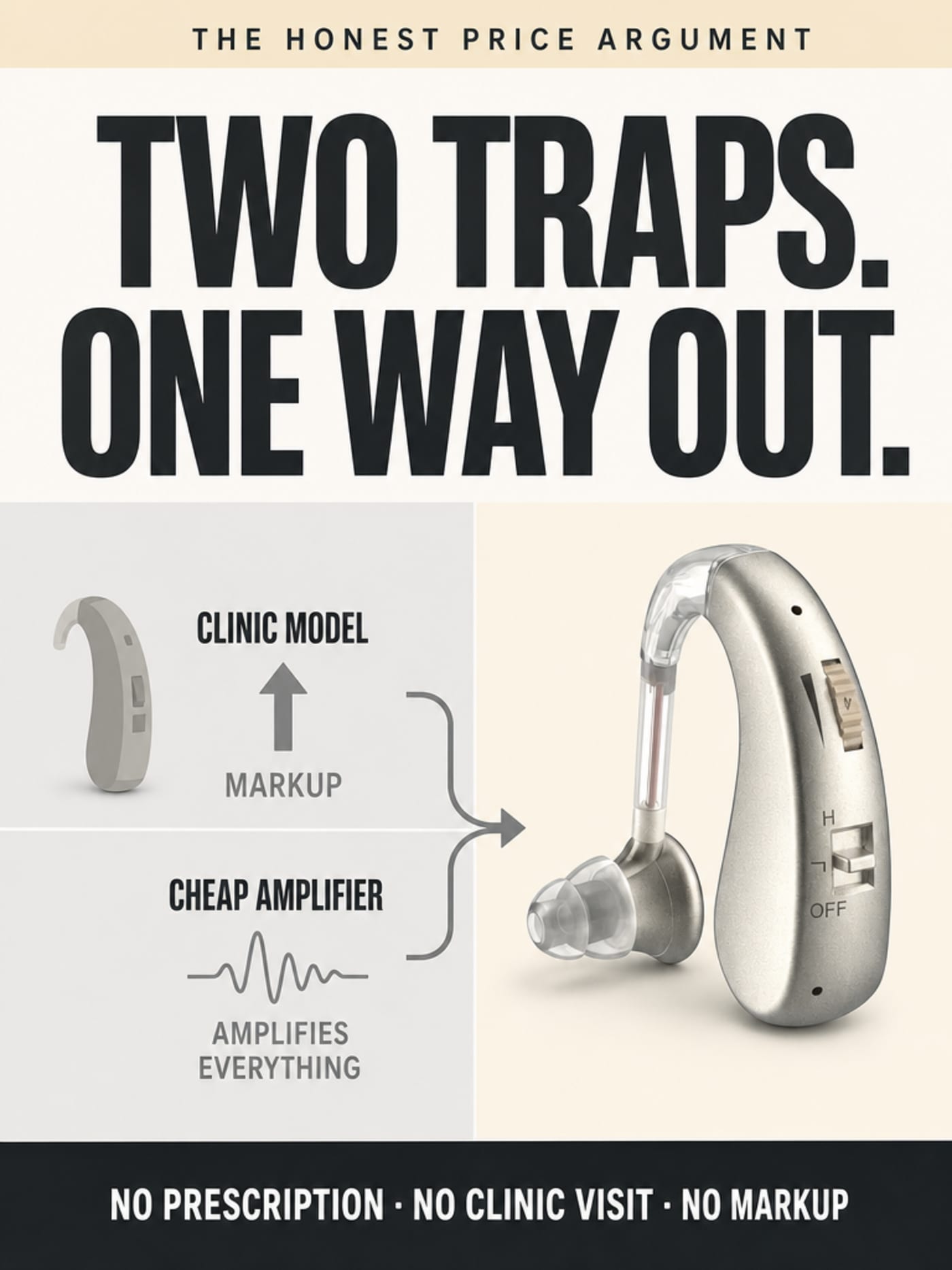
Every category you've compared falls into one of two traps. The clinic model sells you a device for $4,000–$7,000, most of which pays for the building, the staff, the audiologist's time, and the billing infrastructure. The cheap amplifier model sells you a $40–$100 device that makes everything louder — the wind, the dishes, your own heartbeat — and falls out of your ear on the restaurant floor.
Audexa sits in neither trap. It's an OTC hearing device you set up yourself at home, with an adjustable volume dial, four silicone ear-tip sizes, and a rechargeable battery that runs up to ~48 hours on a single charge. No prescription. No clinic visit. No salesman steering you toward the $6,000 pair.
The price isn't low because corners were cut. It's low because the clinic markup doesn't exist here.
2
A federal rule changed in 2022. Most people comparing hearing aids don't know it yet.
On October 17, 2022, the FDA's Over-the-Counter Hearing Aid rule took effect. It legalized the sale of non-prescription hearing devices directly to adults 18 and older with self-perceived mild-to-moderate hearing difficulty — no audiologist, no hearing test, no clinic required.
That rule is why Audexa exists. Not because someone found a loophole — because Congress and the FDA decided that the prescription model was keeping hearing devices out of reach for too many people. Approximately 37.5 million US adults report trouble hearing, yet only about 1 in 4 who could benefit actually use hearing aids.
The ~$4,727 clinic average isn't what the hardware costs. It's what the system around the hardware costs. The rule changed the system. The price caught up.
~37.5MUS adults with reported hearing difficulty — only 1 in 4 use aids
3
The people who actually buy it aren't audiophiles. They're people who walked out of a clinic.
The person who buys Audexa has usually already done the right thing. They went to the audiologist, sat through the appointment, and got the quote. And the quote was $5,200. Or $6,500. Or $7,200. And they left.
Some of them spent $89 on a cheap pair that amplified the refrigerator hum and died in six weeks. Some of them spent nothing, because they couldn't justify the risk on a fixed income.
Then they found out about OTC hearing aids, and they tried a pair with a 30-day money-back, rechargeable, with four ear-tip sizes so it actually sits in the ear. And they stopped asking "what?"
That's not a marketing story. It's the pattern.

🎧 You've already done the comparison research. The last step is trying it.
Try It Risk-Free →
Why It Works
4
One purchase. Everything included. Nothing to buy separately.
The category has a habit of selling you a device and billing you separately for tips, charging docks, cleaning kits, and — in some documented cases —
monthly "maintenance" subscriptions you didn't know you signed up for.
Audexa is a
one-time purchase. What arrives:
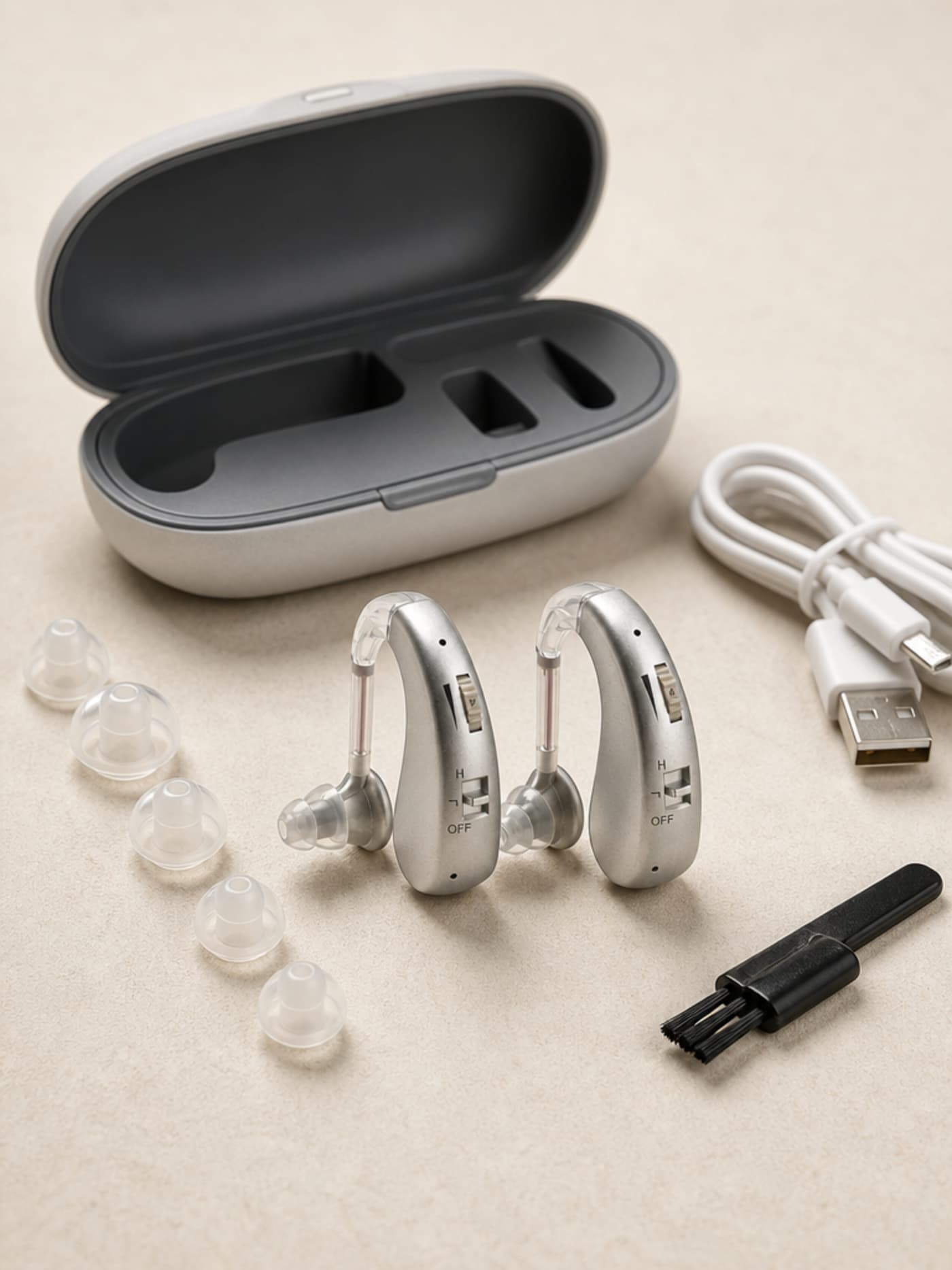
- Twin rechargeable behind-the-ear hearing devices (one pair)
- 4 silicone ear-tip sizes — XS / S / M / L
- USB charging cable
- Hard travel case
- Cleaning brush
No subscription. No hidden monthly charge. No card on file after your order ships.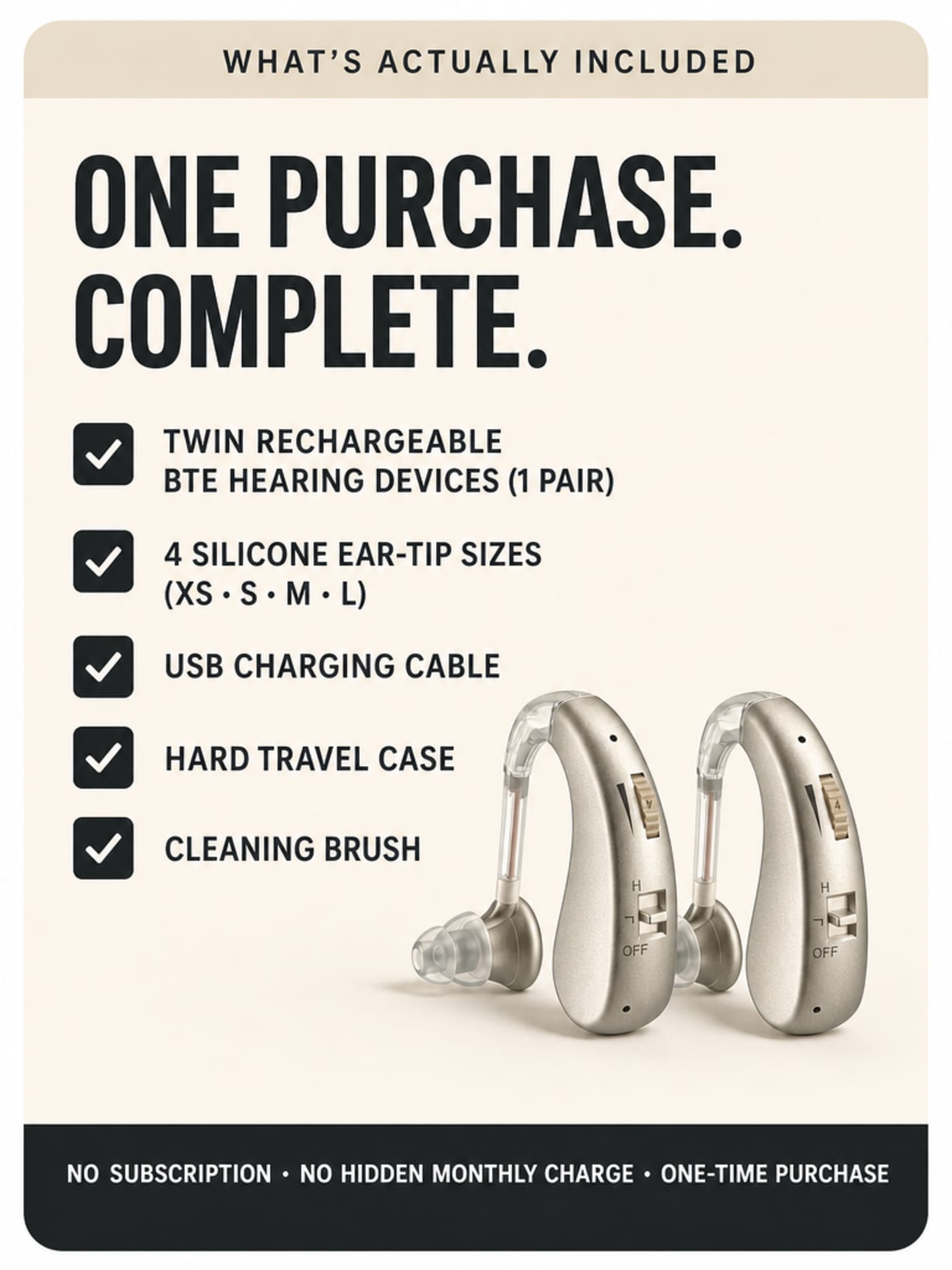
5
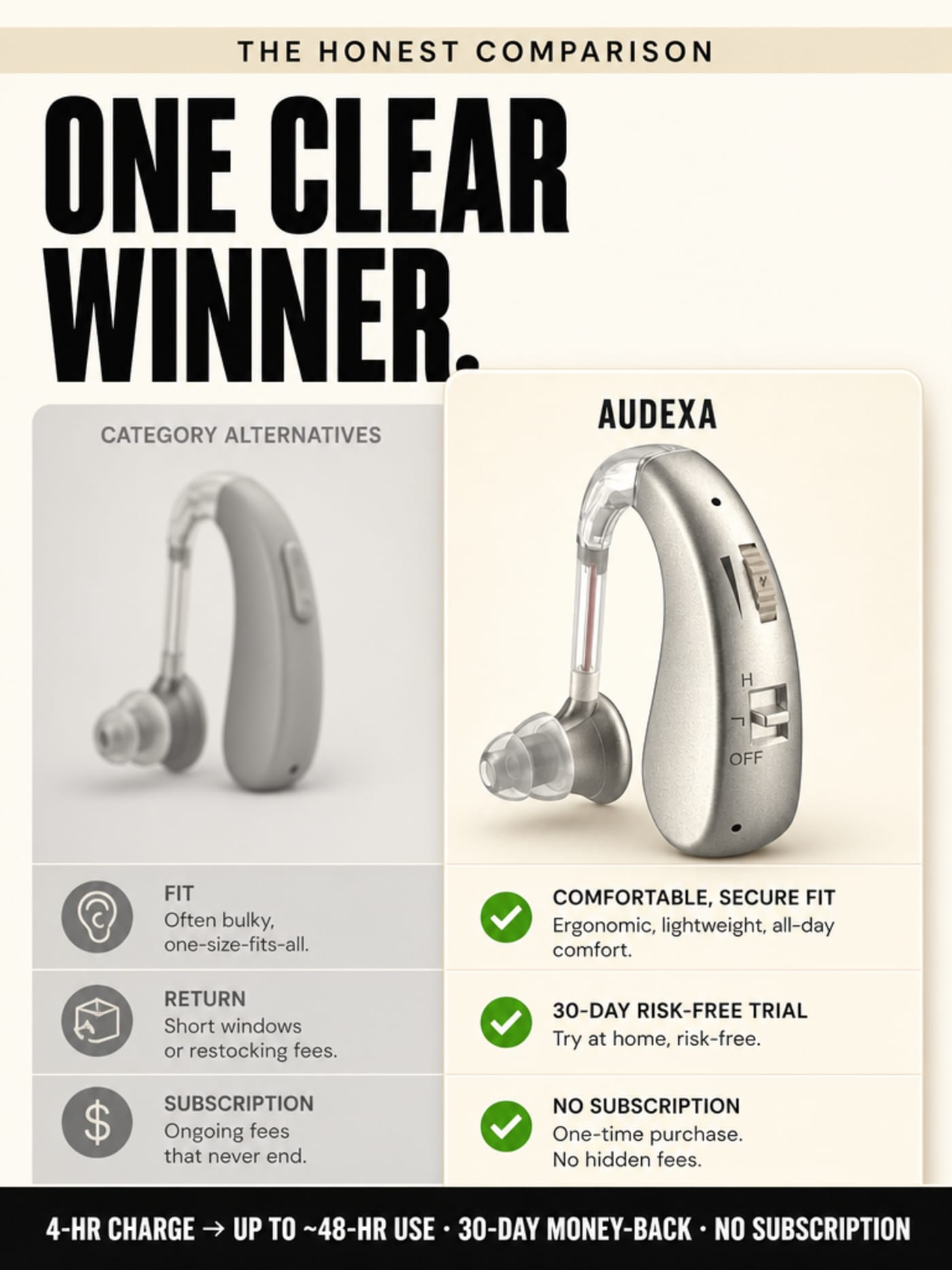
Here's how it stacks against what you've already been looking at.
Prescription clinic aids average ~$4,727 per pair without insurance (HearingTracker 2025, n=879). Cheap amplifiers from Amazon or Walmart run $20–$100 and rarely fit, rarely recharge, and rarely come with a clean return policy. Audexa is rechargeable (4-hr charge → up to ~48-hr use), requires no prescription, comes with four ear-tip sizes, and ships with a 30-day money-back and no subscription. The full breakdown is on the next page — but the comparison column tells the story clearly enough here.
6
Why the fit system matters more than you'd think — and how it actually works.
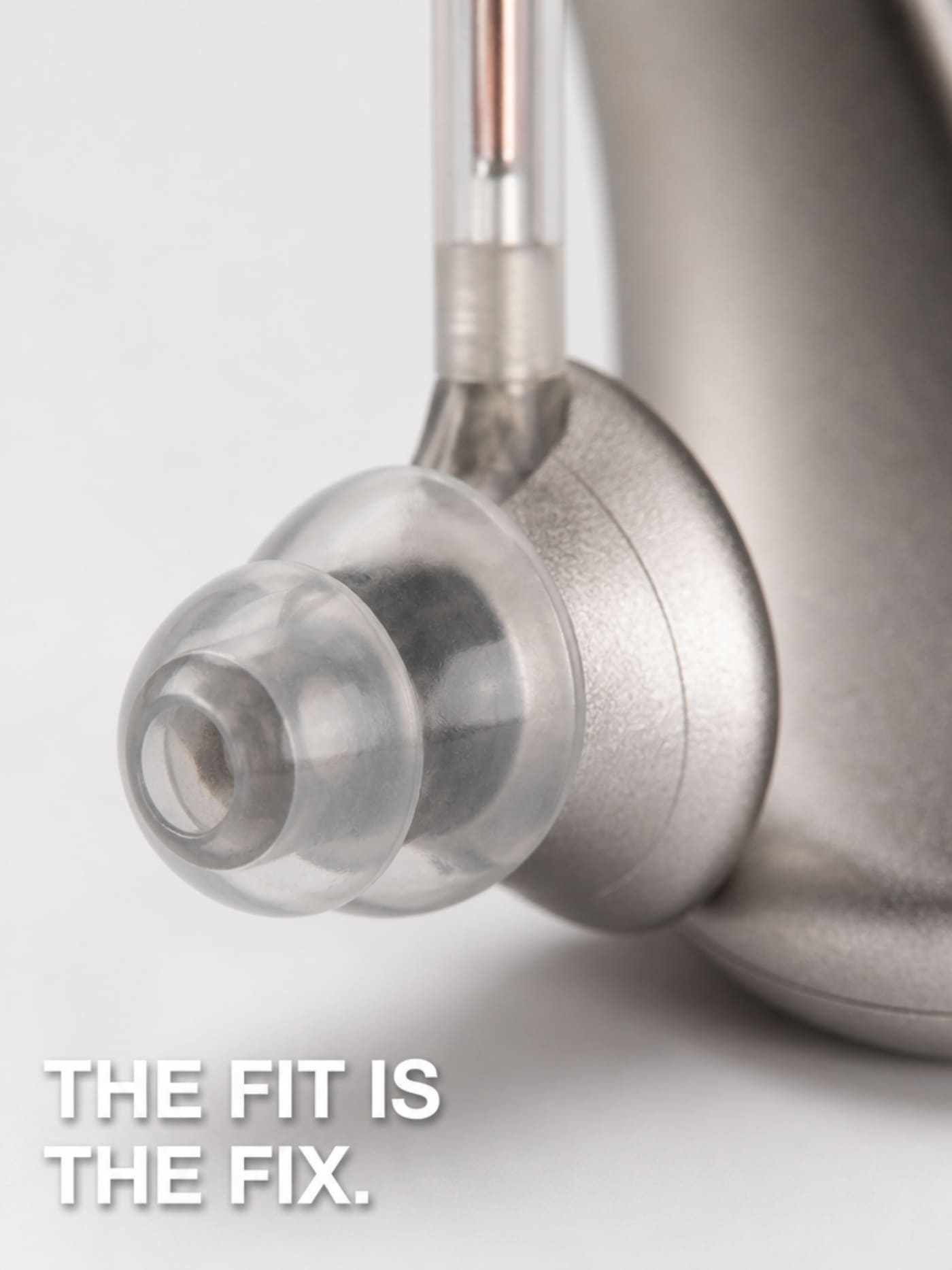
The most common complaint about low-cost hearing devices isn't the sound quality. It's the feedback whistle. And the feedback whistle has a specific cause that most buyers never learn: when the ear dome doesn't seat correctly in the ear canal, amplified sound leaks back around the housing and gets re-amplified. That's the squeal. It's a fit problem, not an electronics problem.
Audexa includes four silicone ear-tip sizes — XS, S, M, and L. The tips are dome-shaped and made to seat against the canal wall, creating a physical seal between the amplified sound and the microphone. When the dome seats, the feedback loop is interrupted at the source. When it doesn't — because the tip is wrong for that ear — the loop runs, and the squeal starts.
The right size is the difference between a device that works and one that sits in a drawer. Four sizes mean you find the right one at home, before you've committed to anything, with a 30-day money-back window if you don't.
Why Now
7
The real question isn't what Audexa costs. It's what the alternative keeps costing.
Here's the arithmetic a lot of buyers don't do until after:
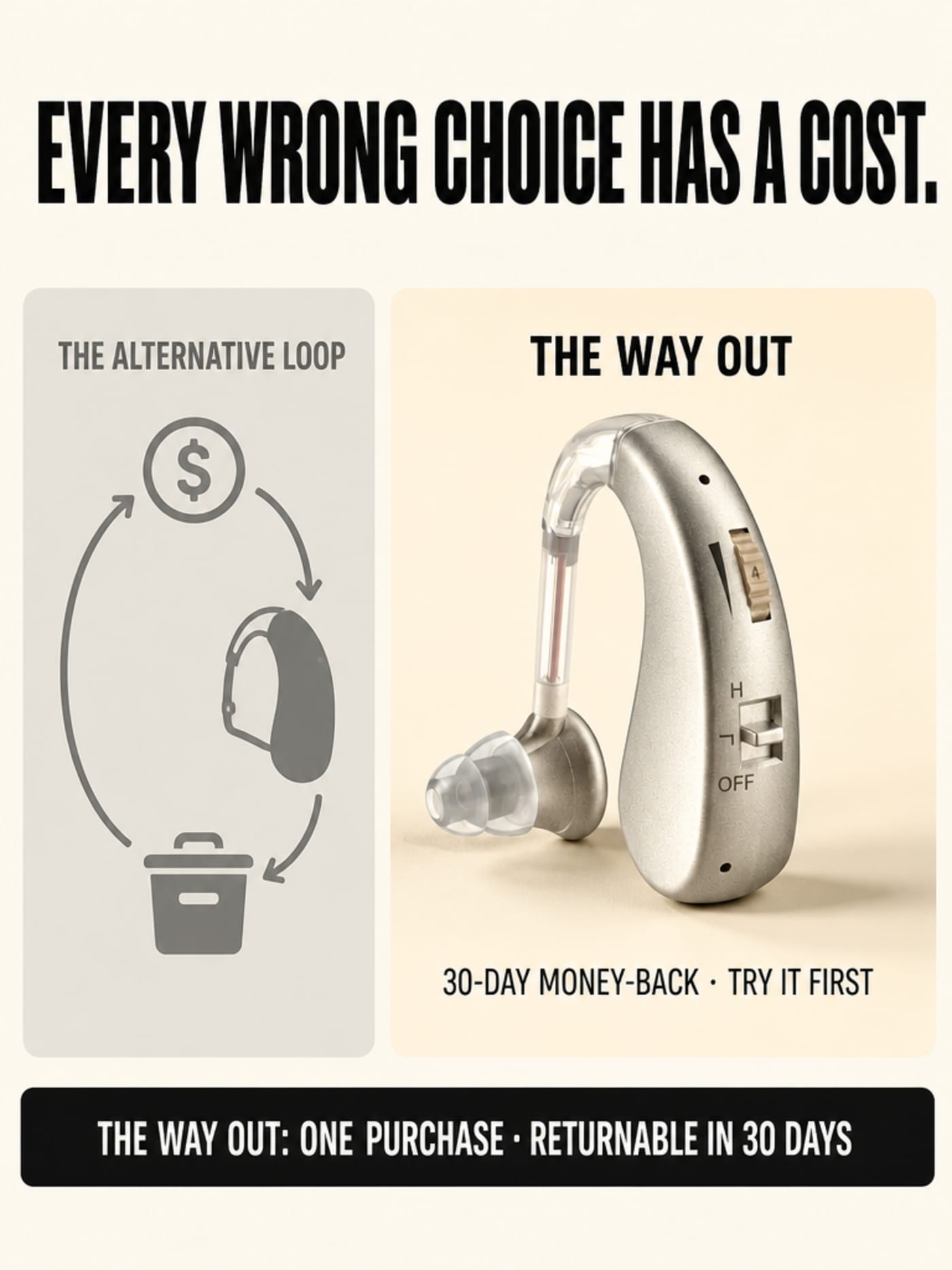
The clinic quote was ~$4,727 on average. Most people in this comparison walk away from that number. That's the right instinct. But then some of them spend $89 on a cheap pair that amplifies the refrigerator hum and the wind and their own heartbeat, and falls off the ear on the restaurant floor. Then they spend another $89 on a different brand. The drawer fills up.
"I bought $65 amplifiers and a leash to attach them to her blouse."
That's not a fringe outcome. That's a pattern the category produces repeatedly.
The honest admission: Audexa is not a clinical hearing aid. It won't replace a prescription device for someone with severe loss. It's a rechargeable OTC hearing device for adults with self-perceived mild-to-moderate difficulty — people who can't justify $5,000 and haven't found the option that doesn't whistle and die in a month.
If you're in that group, the cost of not trying it is another round in the drawer.
The Honest Comparison
Feature
Category Alternatives
Audexa Our Pick
Fit System
Prescription: custom-fitted by audiologist. Cheap amplifier: one-size dome — frequently falls out.
4 silicone ear-tip sizes (XS/S/M/L) included — find the right fit at home
Price to Buyer
Prescription clinic: ~$4,727/pair avg without insurance (HearingTracker 2025, n=879). Cheap amplifier: $20–$100/pair.
One purchase — full breakdown on the next page
Rechargeable
Prescription: varies — many still use disposable batteries. Cheap amplifier: rarely rechargeable.
Yes — 4-hr charge → up to ~48-hr use
Prescription Required
Prescription clinic: yes — audiologist visit and hearing test required. Cheap amplifier: no.
No — FDA OTC rule, Oct 17 2022
Return Policy
Prescription: often non-refundable post-fitting. Cheap amplifier: documented return-trap complaints in category.
30-day money-back
Subscription / Hidden Billing
Cheap amplifier category: documented hidden charges — hand-keyed recurring billing and "two extra months" complaints on record.
None. One-time purchase only.
Setup
Prescription: in-clinic, audiologist-fitted. Cheap amplifier: self-setup, no guidance.
Self-setup at home — volume dial, on/off switch
The clinic markup model and the cheap-amplifier loop are the two options the market keeps handing you. Neither one is the answer.
See the Full Breakdown →
~48 hrs
Use per charge (4-hr charge)
80 dB
Max volume — top-mounted dial
4 sizes
Silicone ear-tips included (XS/S/M/L)
30 days
Money-back return · free US shipping
🛡️
30-Day Money-Back
Audexa ships with a 30-day money-back return. That's not a confidence claim — it's time to verify. Try both ear-tip sizes, wear it at the dinner table, take it on a phone call. If it doesn't do what this page said it does, you return it. The 30 days exist so you don't have to take anyone's word for it — including ours.
Free US shipping applies to both directions of that test.
Is Audexa Hearing Aids™ Right For You?
Perfect for you if
- You've been quoted $3,000+ at a clinic and walked out — or were quoted and never went back
- You've already burned through one or two cheap amplifiers that whistled, fell out, or died in two months
- You're buying for a parent or spouse who refuses to spend $5,000 but might try a money-back-guaranteed option
- You have self-perceived mild-to-moderate difficulty understanding conversations — especially in groups, at a table, on the phone
Not for you if
- You have significant or profound hearing loss that has been clinically assessed — a prescription device is appropriate for that situation
- You're looking for a device that eliminates all background noise entirely — no OTC device in this category reliably makes that claim
- You need wireless Bluetooth streaming to a phone — Audexa is a standalone amplification device, not a smart-connected aid
Our Verdict
9.8/ 10
Audexa is the most honest answer to the most dishonest problem in this category. The clinic model charges thousands for hardware that costs a fraction of that to produce. The cheap-amplifier market sells you something that amplifies everything badly, fits nothing, and breaks in six weeks. Audexa is a rechargeable, four-tip, behind-the-ear device that you set up yourself, buy once, and return in 30 days if it's not right for you. It doesn't pretend to be a $5,000 clinical instrument. It doesn't need to be.
⭐ Editors' Pick — Best Value Hearing Device 2026
Audexa Hearing Aids™
What's on the Next Page
When you click through, you'll find the complete offer — both units, every component listed on this page, the exact ear-tip sizes, the charging cable, the travel case, and the cleaning brush — all documented. The 30-day money-back and free US shipping are confirmed on that page.
Nothing here is asking you to decide anything yet. The next page exists so you can see what's actually in the box — the full specs, the complete return terms, and everything you'd want to verify before committing. You've already done the comparison. This is the last step.
✔ 30-Day Money-Back Return
✔ Free US Shipping Both Ways
✔ No Subscription — One-Time Purchase
✔ No Prescription Required
Still Not Sure?
Is this the same as what an audiologist prescribes?
No — and we won't pretend otherwise. Audexa is an OTC hearing device for adults with self-perceived mild-to-moderate difficulty understanding speech. A prescription hearing aid is clinically fitted to an audiogram, programmed for specific loss patterns, and serviced by an audiologist. If you've been told by a hearing professional that you need a prescription device, that's the right advice for your situation. What Audexa is: the honest, returnable option for people who can't justify $5,000 and need a place to start.
What does the purchase actually get me? I've been burned before.
One pair — both units — rechargeable, with a 4-hour charge lasting up to ~48 hours. Four ear-tip sizes so you can find the fit that doesn't fall out or whistle. A hard case, a cleaning brush, and a USB cable. No subscription, no hidden monthly charge, no card on file after the order ships. And 30 days to return it if it's not right. The full contents and the complete terms are on the next page.
What if I want to return it?
The 30-day money-back means exactly that. Free US shipping applies. The next page has the full return terms — read them before you order, not after. The reason this keeps coming up in the category is that most cheap hearing devices have return policies that look clean and aren't. We'd rather you check ours before you buy.
Why is it so much cheaper than a prescription aid — what's the catch?
There isn't one we're hiding. Prescription aids are expensive primarily because of what surrounds the hardware: the audiologist's time, the clinic's overhead, the custom fitting appointments, the follow-up visits, and the billing infrastructure. The hardware inside them is not $4,727 worth of components. The FDA OTC rule, which took effect in October 2022, exists specifically because Congress decided the prescription model was pricing hearing assistance out of reach for tens of millions of people. Audexa is possible because of that rule — not because of a cheaper device, but because of a shorter supply chain.
The Hearing Device Review is published by the seller of the Audexa Hearing Aids™ described on this page, and purchases made through the links on this page generate revenue for it. This is a paid promotional advertorial, not independent editorial content. The publisher has a direct financial interest in the product reviewed. All claims on this page reflect the publisher's own assessment based on product specifications and publicly sourced market data; they do not constitute independent third-party verification. Audexa Hearing Aids™ are OTC hearing devices intended for adults 18+ with self-perceived mild-to-moderate hearing difficulty. They are not prescription medical devices and are not intended to diagnose, treat, cure, or prevent any medical condition. If you have concerns about your hearing, consult a qualified healthcare professional.