They Worked Their Whole Lives. Hearing Aids Still Want $5,000.
You’re buying for Mom or Dad — not for a brochure. The industry priced “help” like a used car. You don’t have to.
You already know the scene. Dad runs the TV so loud the dog leaves the room. Mom smiles and nods, then answers the question you didn’t ask. You repeat yourself in the kitchen, at dinner, in the car. You’ve brought up hearing aids. They change the subject — or tell you the clinic quote, and the number sits in your chest like a brick.
Five thousand dollars. Sometimes more.
That’s not “a device.” That’s a vacation they never took. That’s the money they spent 40 years being careful with. That’s you, staring at a checkout page wondering if love is supposed to look like a financing plan.
You’re not cheap. You’re trying to help without turning their hearing into a family financial event — and without buying something so clinical they “forget” it in a drawer by Thursday.
The real fear isn’t the price tag. It’s buying the wrong thing for someone who already hates fuss. You might be paying thousands for features and appointments your parent will never use.

They Clocked In For Decades. Why Is “Hearing Better” Priced Like A Luxury Product?
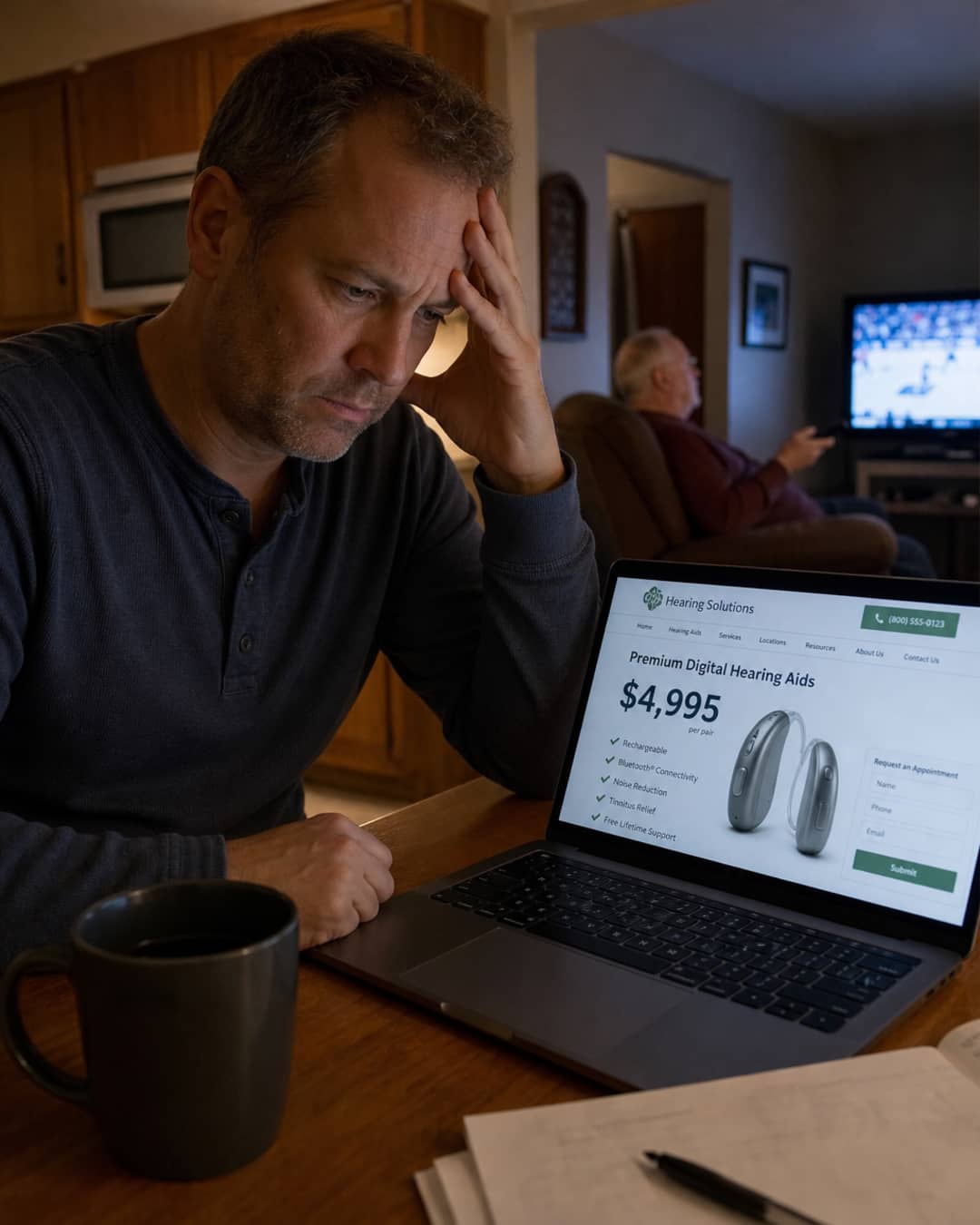
Your parents didn’t raise you on overtime and leftover coffee so a behind-the-ear device could be sold to them like jewelry.
They showed up. They paid the mortgage. They skipped things. Now a product whose job is straightforward — make sound louder, let them turn it, keep it charged — gets wrapped in clinic lighting and a number that would have made them laugh in 1989.
Push them toward the expensive route and you’re the kid who doesn’t “get it.” Do nothing and you watch them miss half the room. Buy something that looks cheap and you’re terrified they’ll never put it on.
That tension isn’t about being stingy. It’s about respect. Helping them hear a grandchild on FaceTime should not require a second opinion from a loan officer.
Audexa sits in the gap the industry pretends doesn’t exist. One pair is $69.99. Two pairs are $139.99. Shipping is always free. Estimated delivery within 5 days.
It is not a custom-programmed clinic package. It is a low-cost, rechargeable, adjustable pair of behind-the-ear hearing aids for everyday use. Stop treating “help Mom hear the TV” as a $5,000 decision by default.
$5,000 Isn’t Automatically “Better.” It’s A Pile Of Things Your Dad May Never Touch.

Before you write a check that size for a parent, know what that number is actually buying.
Premium hearing aids can include custom fitting, follow-up visits, advanced processing, Bluetooth, and programming to an audiogram. Some people need that path. If a professional has already said your parent needs it, listen.
What you should not do is confuse a longer feature list with the gift your parent will actually wear.
A lot of that $5,000 is infrastructure — appointments, branding, extras that sound impressive in a waiting room. Your dad may never pair a phone to his ear. Your mom may never want a specialist to “tune” anything. They may just want to turn a wheel, charge it overnight, and not look like they’re wearing a medical billboard.
Audexa does not pretend to be that premium stack. What you get is adjustable volume, a rechargeable battery designed to last the day with an overnight charge, a discreet design, silicone tips in different sizes, a USB cable, and a cleaning brush.
The useful comparison is “which features will they use by Wednesday.” If you’re paying thousands for Bluetooth they will ignore and appointments they will cancel, you are not being a better son or daughter.
This Might Be The Hearing Aid Your Dad Actually Needs — Not The One Guilt Would Buy

Guilt is a terrible shopper. It points you at the most expensive option because you love them. They, meanwhile, want something they understand in 30 seconds. No app. No lecture. No device that makes them feel old the second they see it in the mirror.
Audexa is built around essentials:
- Volume they can adjust themselves
- Rechargeable — no hunting for tiny batteries at 10 p.m.
- A behind-the-ear shape meant to stay low-visibility
- Comfortable enough for everyday wear
- Multiple ear-tip sizes in the package
It is not the right device for every hearing situation. If they need fully programmed, professionally fitted hardware, this is not a substitute. If you want an affordable way to cover the basics — louder, adjustable, charge at night, wear without a scene — this is the option the $5,000 ads skip.
You’re not choosing “less love.” You’re choosing the device they might put on without a fight.
If It Looks Like Hospital Equipment, It Lives In A Drawer

The purchase that haunts adult children isn’t the expensive one. It’s the unused one.
You pictured helping. They pictured something bulky, complicated, obvious. It goes in a bathroom drawer. You stop asking. They keep missing the punchline.
A gift they’ll feel comfortable wearing has to survive three tests: Can they put it on? Can they live with how it looks? Can they charge it without calling you?
Audexa sits behind the ear. Slim tube. Champagne body that doesn’t scream “device.” Volume is a physical wheel — no menus. Overnight charge with the USB cable. Cleaning brush included. Tips in more than one size.
The ritual is boring, which is the point. Behind the ear. Tip in. Wheel if needed. Charger on the nightstand. That’s the whole speech.
You are not trying to turn them into “hearing aid people.” You are trying to give them something they won’t be embarrassed to keep on at the store.
You’re Not The First Kid Who Refused To Spend Thousands “Just Because”

This search has a fingerprint. Adult children on a laptop after everyone else is asleep. Spouses tired of repeating the same sentence. People who already got quoted clinic money and closed the tab.
When buyers talk about Audexa, they rarely write poetry. They talk about the unglamorous tests that decide whether a gift works: it went on without a struggle. Charging made sense. It didn’t look huge. The price didn’t start a fight. Someone bought a pair for a parent or a partner.
Read the ones from people who were in your exact spot. Decide if it sounds like your house.
Give Them 90 Days. Not A Lecture And A $5,000 Hole.

You can buy the most decorated hearing aid on the market and still not know if they’ll wear it until they wear it.
That’s the trap. You’re making a permanent-feeling decision for a person who isn’t even sure they want a device on their ear.
Audexa comes with a 90-day return policy, subject to the applicable terms. That is not a magic fairy tale. It is time — time for the fit, the volume wheel, the overnight charge, the “do I even want this on my ear” question — without locking the family into a clinic-sized commitment on day one.
You’re not forcing a lifestyle. You’re giving them a chance to see if the essentials are enough.
Free shipping. Estimated delivery within 5 days. $69.99 for one pair. $139.99 for two if you want a spare or you’re covering two people.
If it isn’t right, you use the policy as written. If it is, you didn’t need a $5,000 invoice to help.
What Other Families Are Saying
“Bought these for my dad after the clinic quoted him $4,800. He figured out the volume wheel in about a minute. No app, no lecture. He actually wears them at dinner now.”
Karen M. · Bought for her father
“I was worried they’d look bulky and he’d refuse to wear them. They’re discreet enough that he keeps them on at the store. The different ear tips made a difference for comfort.”
Mike T. · Bought for his dad
“The clinic price made my stomach drop. This was a straightforward way to try the basics without a huge commitment. Charging overnight is simple — she doesn’t need me to help.”
Priya S. · Bought for her mother
“My husband was skeptical. The physical volume control and the fact that it charges like a phone convinced him to try it. He wears it more than I expected.”
Linda R. · Bought for her husband
“I got the two-pair deal so both my parents could try them. The low price made it easy to give them a chance without a big fight about money.”
David K. · Bought for both parents
“She didn’t want anything that looked medical. These sit behind the ear and don’t draw attention. The 90 days gave us time to see if she’d actually keep them on.”
James P. · Bought for his mother
You’re Not Trying To Become Their Audiologist. You’re Trying To Be Their Kid.
The decision in front of you is simpler than the industry wants it to feel:
- $5,000 is not the only “real” option
- Extra features only matter if Mom or Dad will use them
- A gift that looks and feels like a device they can live with beats a trophy they hide
- A 90-day window, under the actual return terms, is how you stop guessing
Audexa is the affordable, rechargeable, adjustable pair built for that job. Not for every ear. For the parent who needs the basics — and the son, daughter, or spouse who is done being quoted luxury prices to help.
See the pair, the price, and how it actually sits on an ear.